A sonnet, a lyric, a limerick, and an obscure bee madrigal
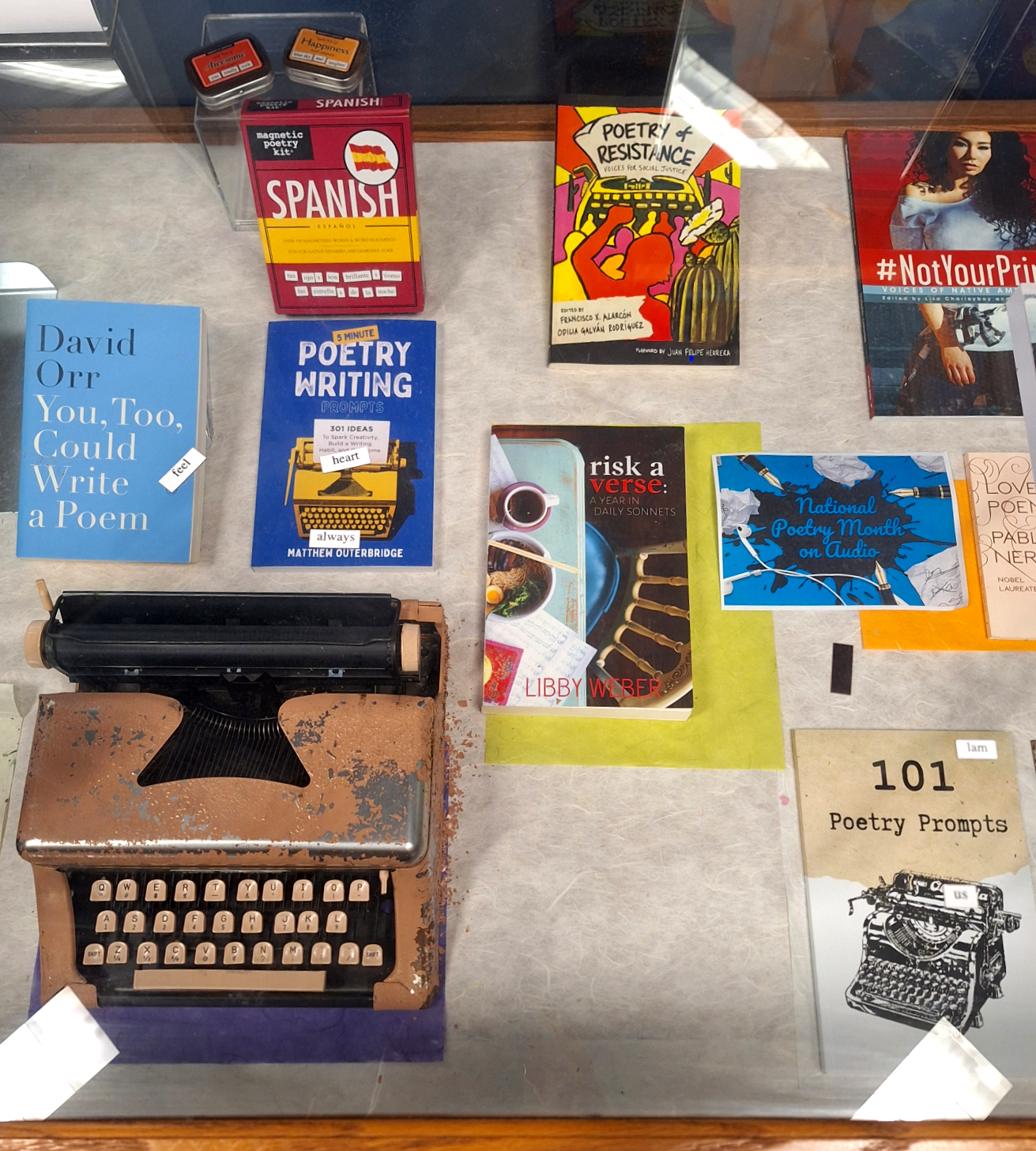
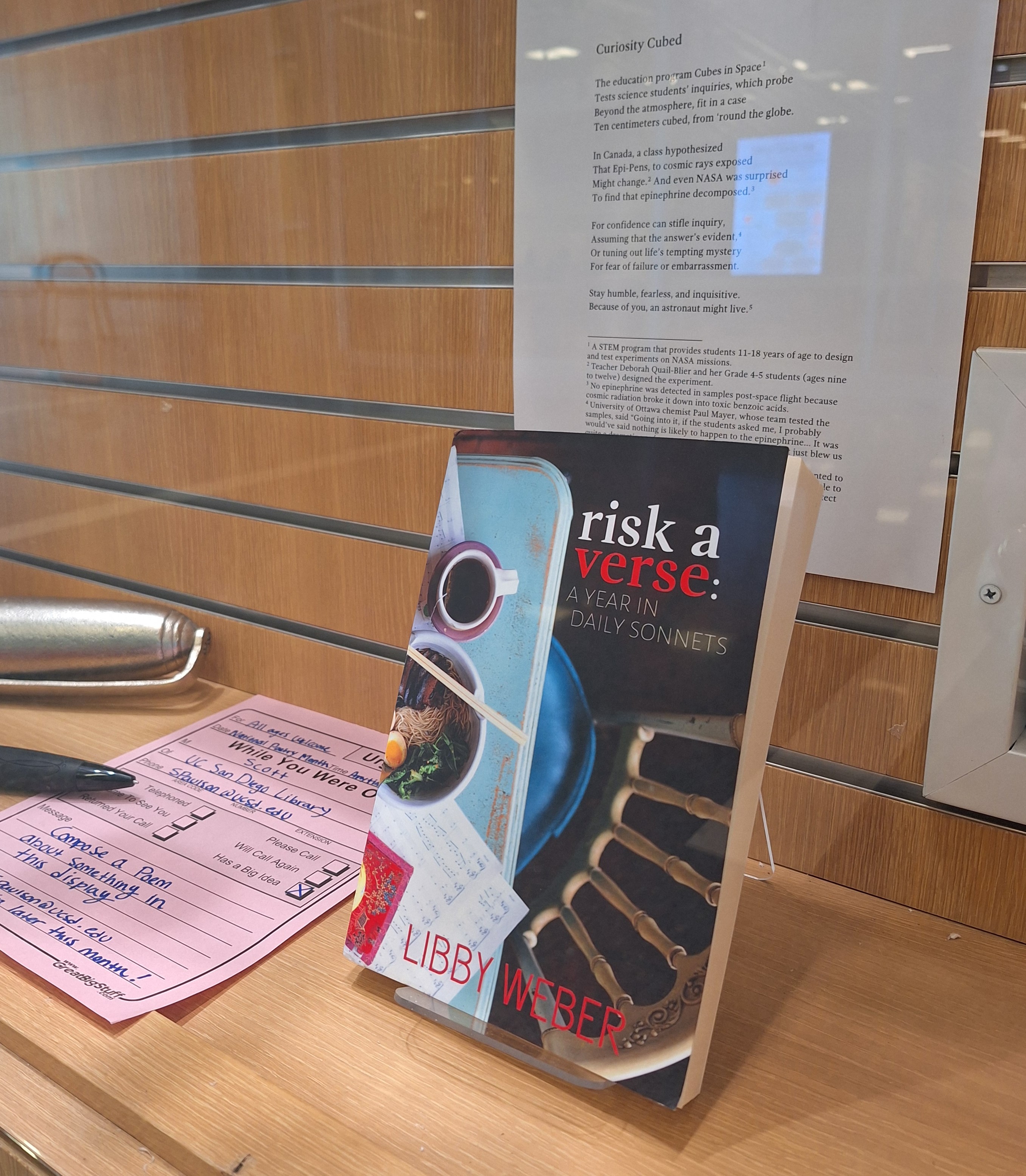
Spring is my favorite season in San Diego, with wave after wave of fragrant blooms, mourning doves nesting in our patio bougainvillea, pinniped pupping season in La Jolla, and of course, April is National Poetry Month! This spring, I’m delighted to be sharing a whole slew of updates, the first of which is that my HUGE sonnet book RISK A VERSE: A Year in Daily Sonnets is being featured in not one, but TWO library displays!
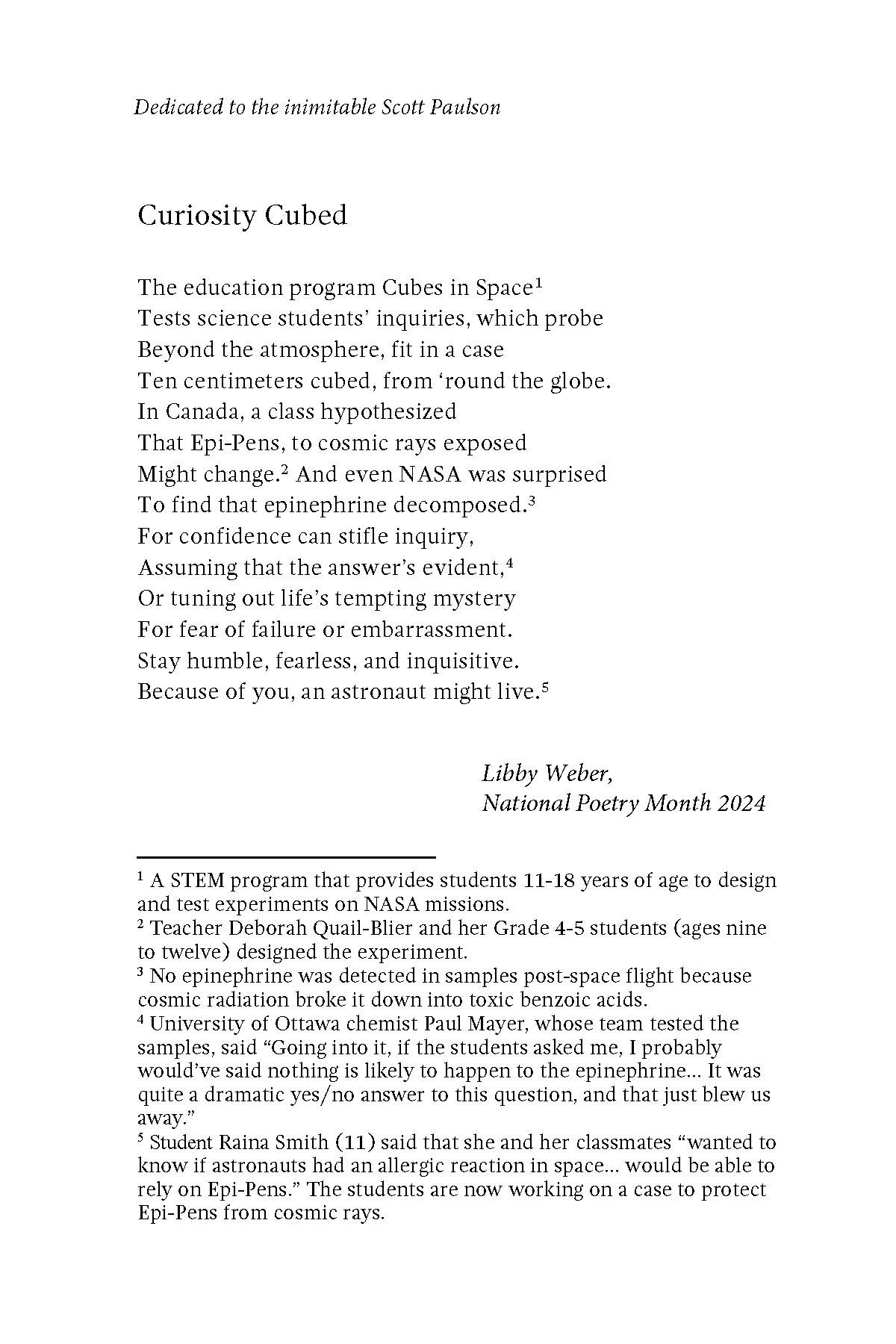
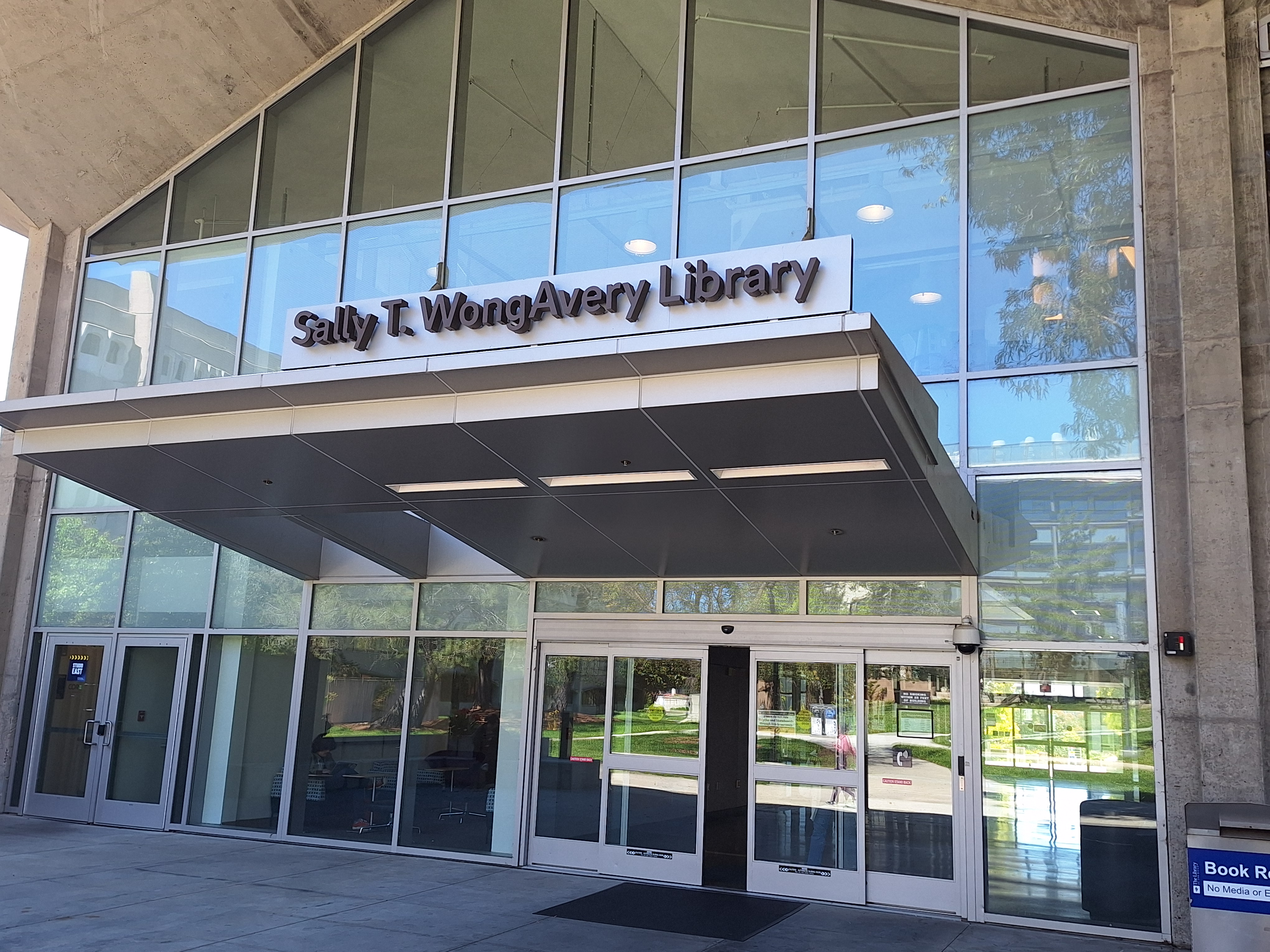
First, the Sally T. WongAvery Library on the Health Sciences campus of University of California San Diego hosted a National Poetry Month exhibit featuring poems on science and medicine, works written by health practitioners and scientists, new poems from young citizen-scientists, AND a brand-new sonnet, written by me! When asked to write on the topic of citizen science, I immediately thought of the Canadian students whose experiment showed that the active ingredient in Epi-Pens degrades when exposed to cosmic rays, so I wrote a sonnet about that! Readers of RISK A VERSE will of course be shocked to see that there are copious footnotes. (hee!)
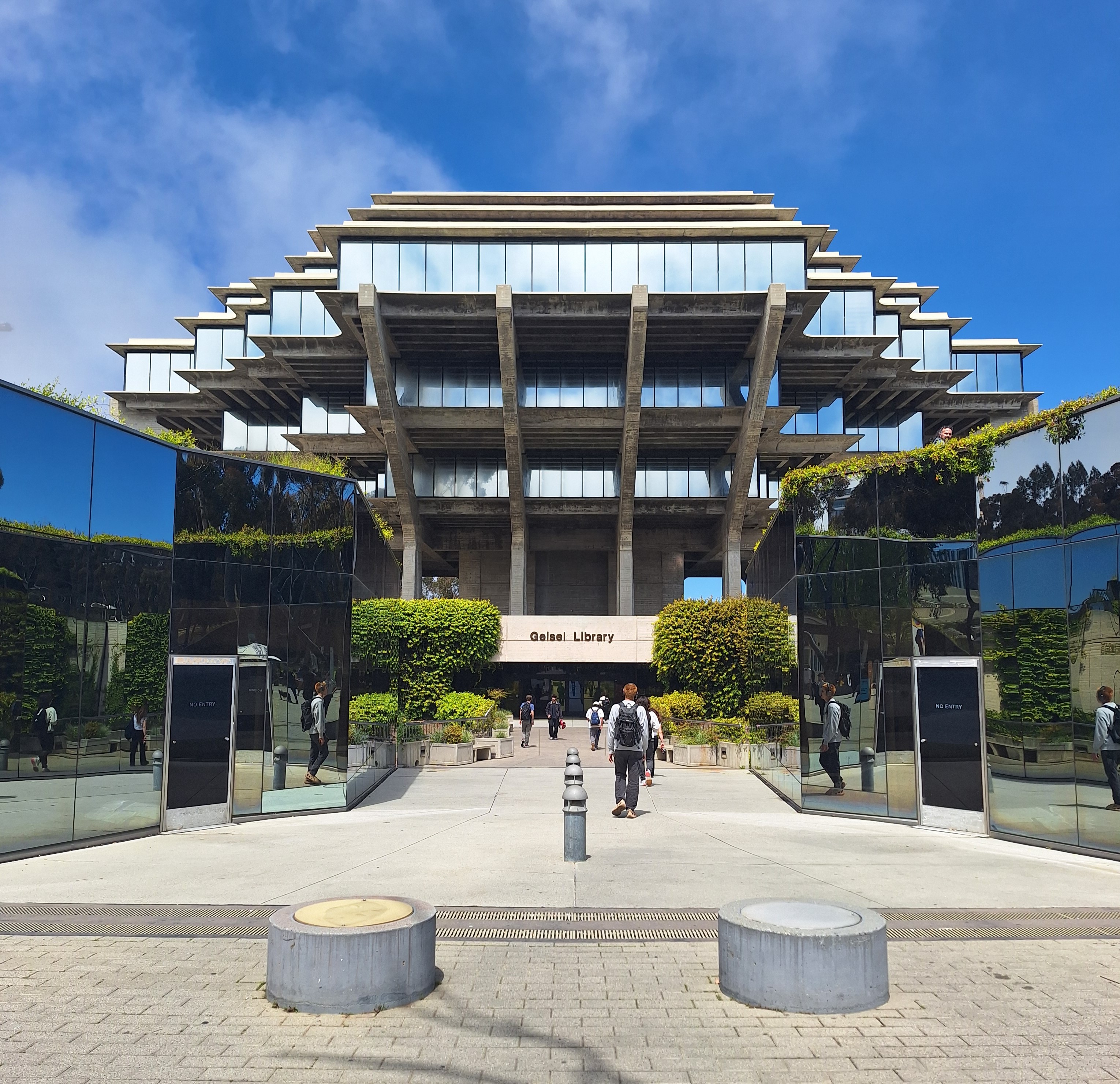
My sonnet book was also included in a National Poetry Month display at the mothership herself, (the Geisel Library) in a display of staff favorite poetry books from the library’s permanent circulating collection, alongside fun poetry-themed activities like haiku dice and magnetic poetry kits!
Later in April, I had the utter joy to hear words that I wrote, beautifully set by composer Amy Gordon, premiered by the Indianola Presbyterian Church Chancel Choir! I hope you’ll enjoy this absolutely stunning performance of our collaboration “Alchemy.” Amy asked me to write something strophic with “Where Have All the Flowers Gone” vibes inspired by the New Haven-based Swords to Plowshares, a non-profit organization that buys back guns and forges them into garden tools, and this was the result! I’m absolutely overjoyed with how this turned out, and the choir did a magnificent job!
What should we do with deadly arms?
Everywhere Everywhere
What should we do with deadly arms?
Starting here and now.
What should we do with deadly arms?
Forge them into garden spades.
Change by change. Change by change.
What should we plant with garden spades?
Everywhere Everywhere
What should we plant with garden spades?
Starting here and now
What should we plant with garden spades?
Ample fruit for harvesting.
Change by change. Change by change.
What shall we do with harvesting?
Everywhere Everywhere
What shall we do with harvesting?
Starting here and now.
What shall we do with harvesting?
Share with neighbors, those in need.
Change by change. Change by change.
What shall we do for those in need?
Everywhere Everywhere
What shall we do for those in need?
Starting here and now.
What shall we do for those in need?
Open doors to welcome them.
Change by change. Change by change.
What shall we do to welcome them?
Everywhere Everywhere
What shall we do to welcome them?
Starting here and now.
What shall we do to welcome them?
Set the table, share the feast.
Change by change. Change by change.
As evidenced by the above, Spring is also a great season for singing, and I’ve not been idle in that regard! For this year’s SACRA/PROFANA Garden Party, our conductor assembled the program from on-theme choral works nominated by the singers. I nominated Healey Willan’s lovely Marian motet, “Rise Up My Love, My Fair One,” so the task of introducing the piece fell to me. I’m very fond of Willan’s music, having been part of the choir for Willan West 2018, a year-long celebration of Willan’s works for the 50th anniversary of his passing. For the Willan West kick-off party, the artistic director asked me to organize a limerick-writing contest, since Willan not only loved reciting limericks, he was also wrote a number of them himself. And so naturally, I wrote ten Willan-themed limericks to serve as the introduction to the event, and also offered a pair of spats, the sort of which Willan often wore, as the grand prize. Unfortunately, none of those limericks were appropriate for Garden Party, so I seized the opportunity to add to my Willan-themed limerick oeuvre!
Healey’s music our voices are trillin’,
And from hearts admiration is spillin’,
He’d exhort, “Sing the words!”
Whether great or absurd.
And to do this, we’re ready and Willan.
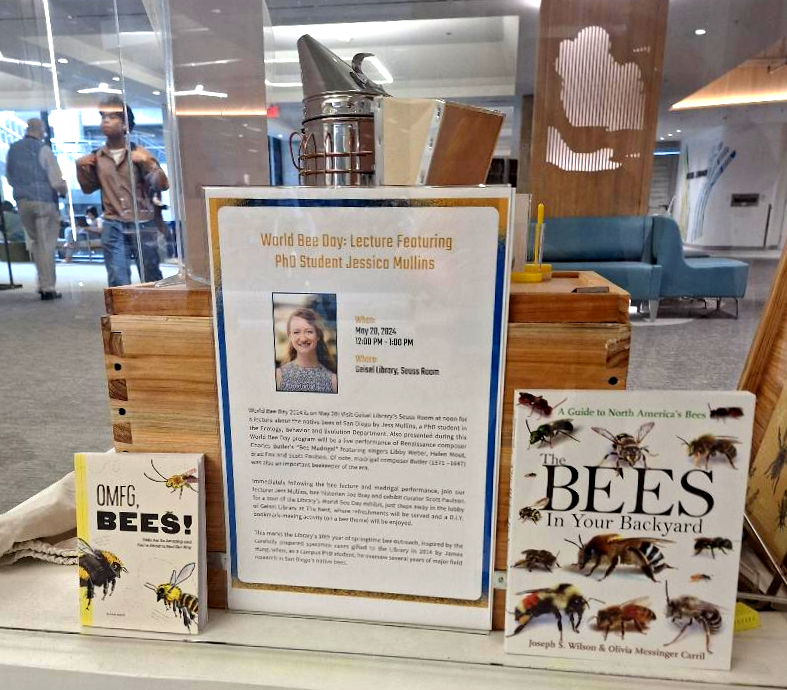
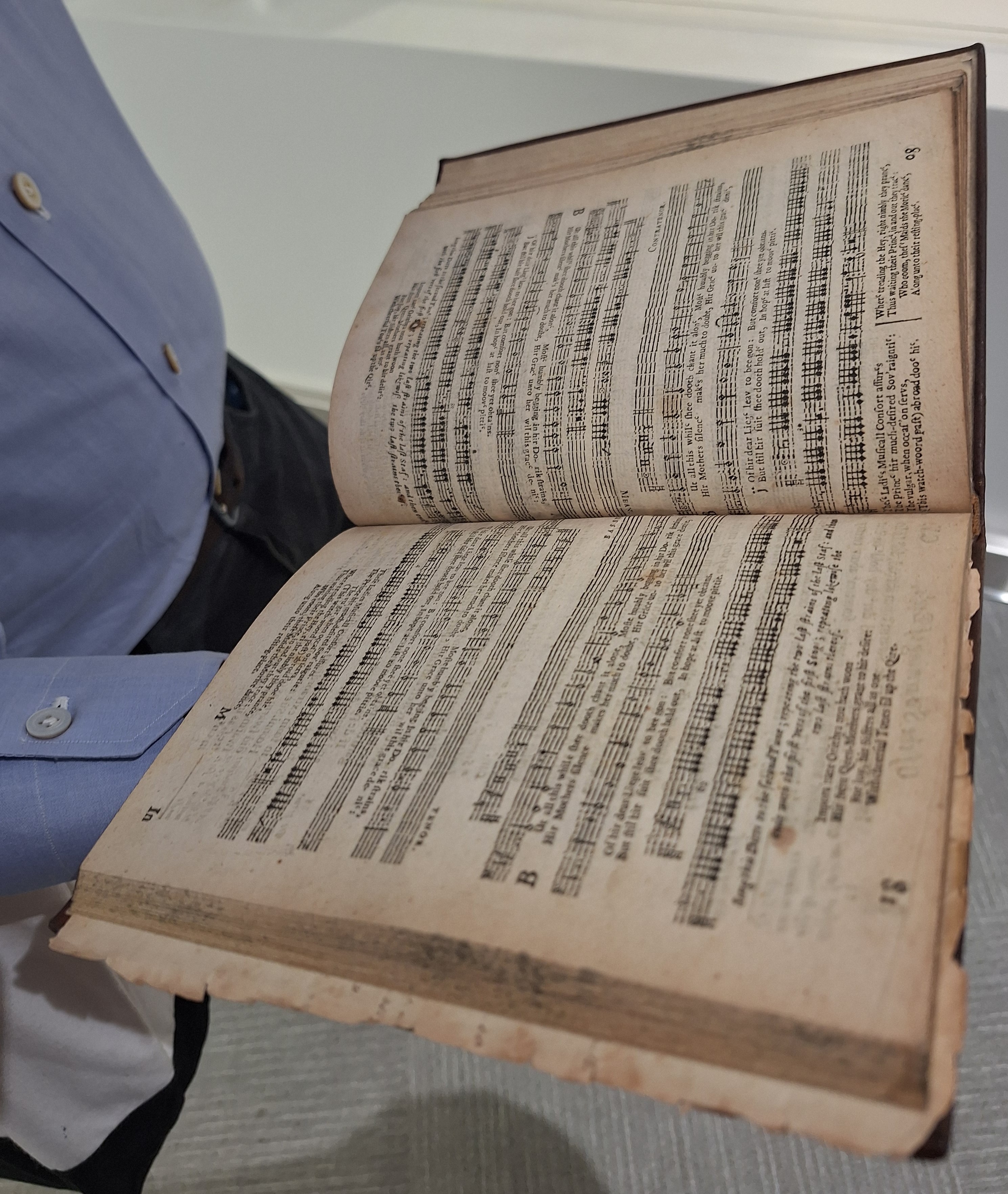
And last but not least, I’d love to share my latest library-related shenanigans, which involved singing in a distinguished(ish) quartet to kick off the UC San Diego Library’s World Bee Day celebration on May 20th! Charles Butler, a Renaissance musicologist, orthographer, and beekeeper, published a treatise on beekeeping in 1609 called The Feminine Monarchie, which was the first scientific work on apiculture written in English. In this book, he included the score of his own four-part choral work Melissomelos, or The Bee’s Madrigal, which describes hive hierarchy and culture in delightfully flowery terms and includes sections inspired by the piping sounds made queen bees before the hive swarms. I first became aware of this piece when Geisel Library’s Outreach Coordinator Scott Paulson reached out to me to put together a quartet to perform it for World Bee Day.
The good news is that there is a freely-availabile score of the Bee Madrigal on IMSLP. The bad news is that it’s a blurry scan of Butler’s original part-song score, which we lacked the wherewithal to modernize. Having found an accomplished recording of the piece by Little St. Mary’s Parish Choir in Cambridge, UK on YouTube, I was able to find the conductor of that performance, Simon Jackson, on Twitter. I reached out to see if he had a modern notation score that we could use. He kindly Twitter-introduced me to Toby Ward, of the superb Ensemble Pro Victoria, who provided us with a score prepared by Magnus Williamson, Professor of Early Music at Newcastle University, as part of a Leverhulme Trust-funded interdisciplinary research project called Bee-ing Human, to whose co-leader, Cambridge English Professor Jennifer Richards, Simon also introduced me. In absolutely delightful social-media-assisted kismet, not only is one of the aims of the Bee-ing Human project to create an interactive online edition of Butler’s The Feminine Monarchie, but Toby’s Ensemble Pro Victoria will also be including the Bee Madrigal on a future program of early music featuring animal sounds, so there will be new and exciting ways to enjoy these works in the very near future!
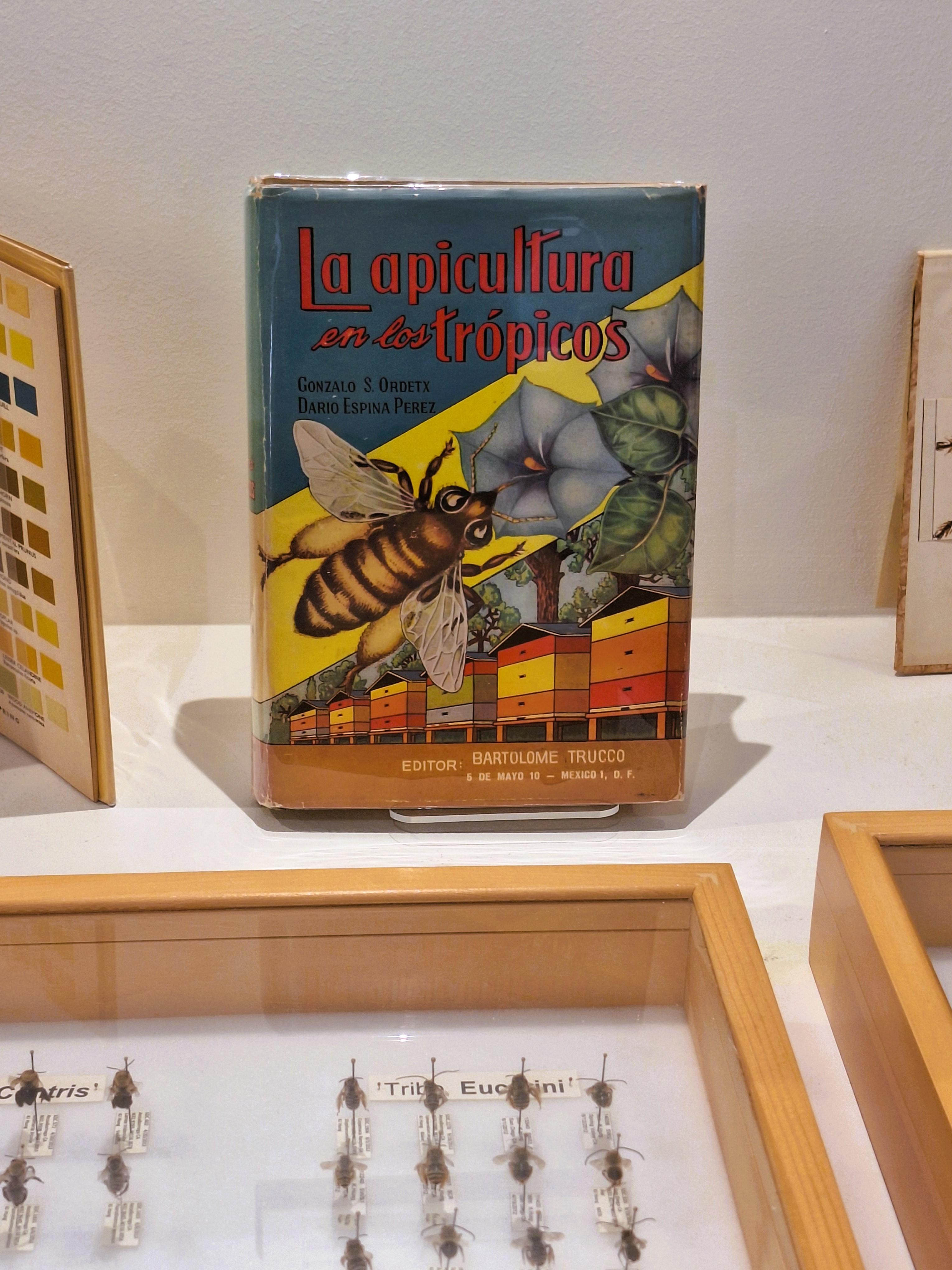
I’m so pleased to report that our performance was a worthy opening act for World Bee Day speaker Jess Mullins, and also a great kick-off for a remarkable library exhibit celebrating World Bee Day and UCSD’s official recognition as a Bee Campus. This effort to secure recognition by creating significant pollinator habitat on campus was spearheaded by Biological Sciences Associate Dean James Nieh, whose lab studies how stressors affect bee behaviors and bee communication (including waggle dances!). In addition to beautiful displays from the Nieh Lab and bee researcher James Hung, the exhibit contains antiquarian treasures from the collection of bee historian Joe Bray, including an original part-song score of Butler’s Melissomelos. And best of all, Joe brought his own complete, original edition of Butler’s The Feminie Monarchie with him to the event, so I got to see it in person, which was AMAZING!
So yeah, it’s been a pretty active couple of months. And it’s far from over, since I have the incredible privilege to be premiering a spectacular new multi-movement work by composer Cory Hibbs with SACRA/PROFANA next month! And I’ll hopefully have a recording of another world premiere collaboration with Amy Gordon to share in the not-distant future!
And until then, please enjoy this selection of photos from recent events.
Love to All,
Libby


 Libby Weber